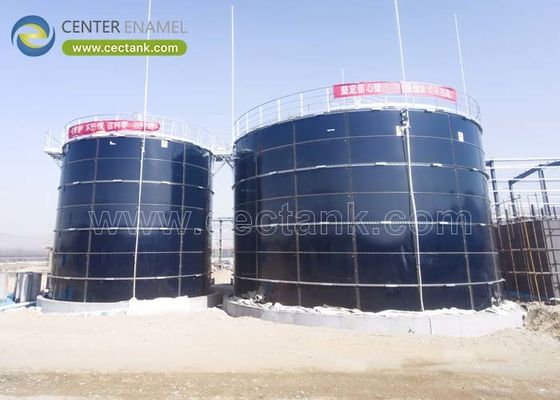
Biogazowe reaktory CSTR ze stali szkliwionej
2026-08-31

Zbiorniki biogazowe CSTR ze szkła zespolonego ze stalą Reaktory z mieszadłem ciągłym
Reaktor z mieszadłem ciągłym — CSTR — jest podstawowym elementem przemysłowego fermentacji beztlenowej. Gospodarstwa rolne, zakłady przetwarzania odpadów spożywczych, oczyszczalnie ścieków i zakłady biogazu przemysłowego dostarczają odpady organiczne do fermentorów CSTR, gdzie mikroorganizmy przekształcają je w biogaz bogaty w metan. Obudowa reaktora jest narażona na trudne warunki: korozyjną zawiesinę, siarkowodór w przestrzeni gazowej, ścieranie spowodowane mieszaniem oraz stałe temperatury 35-38 stopni Celsjusza w przypadku pracy mezofilnej — przez cały dzień, codziennie, przez dziesięciolecia.
Zbiorniki biogazowe CSTR ze szkła zespolonego ze stalą (GFS) firmy Shijiazhuang Zhengzhong Technology Co., Ltd (Center Enamel) zapewniają odporną na korozję obudowę, której wymaga praca CSTR. Powierzchnia szklana, zespolona ze stalą w temperaturze 820-930 stopni Celsjusza, jest odporna na chemię zawiesiny i H2S, podczas gdy szczelne pokrywy skręcane gromadzą biogaz. Center Enamel — pierwszy chiński producent GFS z prawie 200 patentami na szkliwienie — od 2008 roku dostarcza fermentory klasy CSTR od jednostek rolnych o pojemności 200 m3 do systemów komunalnych o pojemności 16 760 m3 w ponad 100 krajach.
1. Czym jest fermentor beztlenowy CSTR?
CSTR to fermentor beztlenowy o ciągłym zasilaniu i ciągłym mieszaniu, w którym doprowadzane odpady organiczne są szybko rozcieńczane i trawione w kontrolowanej temperaturze.
- Przepływ ciągły: pasza jest doprowadzana, a pozostałość fermentacyjna jest usuwana w sposób ciągły lub w częstych partiach, utrzymując objętość reaktora zasadniczo stałą.
- Pełne mieszanie: mechaniczne mieszadła lub recyrkulacja gazu utrzymują zawieszone cząstki stałe i jednorodną temperaturę, maksymalizując kontakt między mikroorganizmami a podłożem.
- Kontrolowane środowisko: praca mezofilna utrzymuje temperaturę 35-38 stopni Celsjusza (termfilna 50-55 stopni Celsjusza), z grzałkami lub płaszczami utrzymującymi temperaturę.
- Gromadzenie biogazu: szczelna pokrywa zbiera biogaz bogaty w metan (zazwyczaj 55-65% metanu) do kogeneracji, paliwa do kotłów lub wtrysku do sieci.
2. Dlaczego GFS to właściwa obudowa do pracy CSTR?
Fermentory CSTR narażają powierzchnie zbiorników na działanie chemii zawiesiny, pary H2S i ścierania przez mieszadło — dokładnie takie środowisko, dla którego opracowano GFS.
- Odporność na zawiesinę i kwasy: wypalana powierzchnia szklana jest odporna na kwasy organiczne, amoniak i wahania pH wewnątrz fermentora bez łuszczenia się lub pękania.
- Ochrona przestrzeni gazowej przed H2S: skraplający się H2S tworzy kwas siarkowy w strefie gazowej; obojętna powierzchnia szklana jest na niego odporna tam, gdzie niepowlekana stal ulega korozji.
- Ścieranie w strefach mieszania: zawieszone cząstki stałe i prądy mieszające nie erodują powierzchni szklanej o twardości 6,0 w skali Mohsa, zachowując integralność zbiornika przez dziesięciolecia.
- Szczelna integracja: zbiorniki GFS są łączone ze skręcanymi, szczelnymi pokrywami, włazami i rurami do zbierania gazu, tworząc szczelny system biogazowy.
3. Jakie systemy pomocnicze są potrzebne w zbiorniku CSTR?
CSTR to system, a nie tylko obudowa: mieszanie, ogrzewanie, zbieranie gazu i izolacja są projektowane jako jeden pakiet wokół zbiornika GFS.
- Mieszanie: zanurzeniowe lub górne mieszadła dostosowane do zawartości cząstek stałych w zawiesinie utrzymują jednorodność reaktora i zapobiegają osadzaniu się.
- Ogrzewanie: zewnętrzne wymienniki ciepła lub wewnętrzne grzałki utrzymują temperaturę mezofilną, z panelami izolacyjnymi na obudowie zbiornika dla zwiększenia wydajności.
- System gazowy: szczelne pokrywy, odpływy kondensatu i wyloty gazu łączą zbiornik z urządzeniami do magazynowania i wykorzystania.
- Bezpieczeństwo i dostęp: włazy, platformy, przyrządy do pomiaru poziomu i temperatury oraz zabezpieczenia przed nadciśnieniem są konfigurowane zgodnie z przepisami bezpieczeństwa.
| Kryterium oceny | Zbiornik CSTR GFS (Center Enamel) | Fermentor betonowy | Fermentor stalowy spawany na miejscu |
|---|---|---|---|
| Korozja w zawiesinie i H2S | Doskonała — zespolona powierzchnia szklana | Umiarkowana — pęknięcia, atak H2S | Słaba — korozja przestrzeni gazowej |
| Szczelność gazowa | Wysoka — skręcane, szczelne pokrywy | Wyzwanie — pęknięcia i nieszczelności połączeń | Zależy od jakości spawania |
| Szybkość budowy | Szybka — panele skręcane w tygodnie | Bardzo powolna — miesiące odlewania | Powolna — spawanie na miejscu |
| Kontrola temperatury | Dobra — opcje izolacji, niskie straty ciepła | Masa termiczna, ale ryzyko pękania | Umiarkowana — naprężenia spawalnicze |
| Cykl życia i konserwacja | Minimalna — projektowana żywotność 30-50 lat | Cykle napraw i nieszczelności | Ponowne powlekanie co 5-10 lat |
Zapewnienie inżynieryjne
Zbiorniki CSTR Center Enamel są zweryfikowane metodą elementów skończonych (FEA) zgodnie z AWWA D103-09, produkowane zgodnie z normami ISO 9001/45001, w 100% testowane iskrowo na obecność przebić wysokiego napięcia i wspierane certyfikatami ISO 28765 i NSF/ANSI 61 — z referencjami fermentorów od jednostek rolnych o pojemności 200 m3 do systemów komunalnych o pojemności 16 760 m3.
CSTR działa dzięki biologii, ale żyje w stali. Obudowa musi wytrzymać korozyjną zawiesinę przez 30 lat bez awarii powłoki — dlatego budujemy zbiorniki fermentacyjne z zespoloną powierzchnią szklaną i uszczelniamy je szczelnymi pokrywami skręcanymi.
Często zadawane pytania (FAQ)
Co to jest fermentor beztlenowy CSTR?
CSTR (reaktor z mieszadłem ciągłym) to fermentor beztlenowy o ciągłym zasilaniu i ciągłym mieszaniu, w którym odpady organiczne są trawione w kontrolowanej temperaturze — zazwyczaj 35-38 stopni Celsjusza w trybie mezofilnym lub 50-55 stopni Celsjusza w trybie termfilnym — produkując biogaz bogaty w metan. Skręcane zbiorniki GFS zapewniają odporną na korozję, szczelną obudowę.
Dlaczego stosować zbiorniki GFS do fermentorów CSTR?
Praca CSTR łączy korozyjną zawiesinę, parę H2S i ścieranie przez mieszadło. Powierzchnia szklana GFS, zespolona w temperaturze 820-930 stopni Celsjusza, jest odporna na wszystkie trzy czynniki bez łuszczenia się lub ponownego powlekania, a skręcane, szczelne pokrywy gromadzą biogaz — zapewniając projektowaną żywotność 30-50 lat.
Jaki jest dostępny rozmiar zbiornika CSTR?
Center Enamel dostarcza fermentory CSTR od około 200 m3 dla projektów na skalę rolniczą do 16 760 m3 i większych dla zakładów komunalnych i przemysłowych, z systemami ogrzewania, mieszania i gazu zaprojektowanymi dla każdego projektu.
Czy zbiorniki CSTR można dostosować?
Tak — objętość reaktora, stosunek średnicy do wysokości, typ i liczba mieszadeł, metoda ogrzewania, izolacja, konstrukcja szczelnej pokrywy i przyrządy bezpieczeństwa są projektowane zgodnie z rodzajem substratu, reżimem temperaturowym i lokalnymi przepisami.
Kluczowe wnioski
- CSTR to fermentor beztlenowy o ciągłym zasilaniu i pełnym mieszaniu, produkujący biogaz bogaty w metan w temperaturze 35-38 stopni Celsjusza (mezofilny).
- Obudowy GFS są odporne na kwasy zawiesiny, atak H2S w przestrzeni gazowej i ścieranie przez mieszadło przez 30-50 lat.
- Szczelne pokrywy skręcane integrują fermentor w szczelny system zbierania biogazu.
- Center Enamel dostarcza zbiorniki CSTR od jednostek rolnych o pojemności 200 m3 do systemów komunalnych o pojemności 16 760 m3 w ponad 100 krajach.
-
2026-08-19
-
2026-07-10
-
2026-07-10